Why Dentures Develop an Odor: Causes and How to Keep Them Fresh in Spokane, WA
Written by the Grishin Denture Specialist laboratory team, with clinical guidance from Michael Grishin, DN, Licensed Denturist.

A noticeable denture odor can be embarrassing, especially when you are speaking closely with family, friends, or other people. In many cases, denture odor is related to food debris, plaque, biofilm, adhesive residue, or dentures that are not being cleaned and stored properly.
However, persistent odor is not always simply a cleaning problem. Dry mouth, oral-tissue changes, denture stomatitis, or an older denture that has become difficult to keep clean can also contribute to an unpleasant smell.
At Grishin Denture Specialist, we help patients searching for dentures Spokane, dentures Spokane WA, Spokane dentures, dentures in Spokane, and a trusted Spokane denturist understand how denture care, oral health, and denture condition can affect everyday comfort and freshness.
If your dentures smell even after cleaning them, understanding the possible cause is the first step toward finding a better solution.
Why Do Dentures Develop an Odor?
Dentures can develop an odor when food particles, plaque, bacteria, fungi, or adhesive residue accumulate on the denture or in areas of the mouth that are difficult to clean.
Like natural teeth, removable dentures can collect deposits. The American Dental Association recommends daily denture cleaning because accumulated biofilm can contribute to oral problems and denture-related odor. Soaking with an appropriate denture cleanser can also help reduce the bacterial load associated with odor. (ADA)
Common causes of denture odor include:
Food trapped around the denture
Plaque and biofilm buildup
Inadequate daily cleaning
Adhesive residue
Dry mouth
Improper denture storage
Dentures that remain in the mouth for extended periods
Cleaning products that are not appropriate for dentures
Oral-tissue problems
An older or damaged denture that is difficult to keep clean
For patients looking for a denture clinic near me, persistent odor is worth paying attention to—especially if it continues despite a consistent cleaning routine.
Can Dirty Dentures Cause Bad Breath?
Yes. Denture buildup can contribute to unpleasant odors and may also contribute to bad breath.
Food debris and microorganisms can accumulate on the denture surface and inside areas that contact the gums. If adhesive residue is left behind, additional material may collect around it.
Bad breath can also originate from the mouth itself. The American Dental Association notes that oral malodor can be associated with food breakdown, dental plaque, and bacteria related to oral conditions. (ADA)
This means cleaning the dentures is only part of the solution.
Good denture hygiene should include:
Cleaning the dentures
Removing adhesive residue
Cleaning the gums
Cleaning the tongue
Cleaning any remaining natural teeth
Properly storing removable dentures
If your dentures are clean but you continue to notice persistent bad breath, the source may be something other than the denture itself and should be discussed with an appropriate dental or medical professional.
Does Denture Adhesive Cause Odor?
Denture adhesive itself is not necessarily the cause of odor, but leftover adhesive can contribute to buildup if it is not removed regularly.
Adhesive can collect on the tissue-contacting surface of the denture and on the gums. Over time, trapped food and other debris may accumulate around the residue.
The ADA recommends removing denture adhesive daily from both the denture and the oral cavity. (ADA)
If you use adhesive, make sure you are also cleaning the areas where it is applied.
If you are suddenly needing much more adhesive than before, however, that raises a different question. Increasing adhesive use can sometimes indicate that the denture no longer fits as well as it once did.
For more information, read our guide on denture fit without more adhesive.
Can Dry Mouth Make Dentures Smell?
Yes, dry mouth can make denture care and oral freshness more difficult.
Saliva helps keep the mouth moist and helps clear food particles and other substances.
When saliva production is reduced, the mouth can feel sticky or uncomfortable, and maintaining a clean oral environment can become more difficult.
Dry mouth may be associated with:
Certain medications
Dehydration
Mouth breathing
Illness
Aging
Some medical conditions
Patients with dry mouth may also notice that dentures feel different, less comfortable, or less stable.
If you have noticed both dry mouth and changes in denture comfort, our article Why Dentures Feel Different After Health Changes in Spokane, WA provides more information about how changes in saliva and overall health can affect dentures.
How Do You Get Rid of Denture Odor?
The most effective first step is a consistent daily denture-care routine.
The ADA recommends daily denture cleaning with brushing and an effective, nonabrasive denture cleanser. Commercial cleansers are available in several forms, and manufacturer instructions should be followed carefully. (ADA)
A good routine includes:
1. Remove the dentures. Take the dentures out before cleaning them.
2. Rinse away loose food. Use warm—not hot—water.
3. Remove adhesive residue. Gently clean areas where adhesive collects.
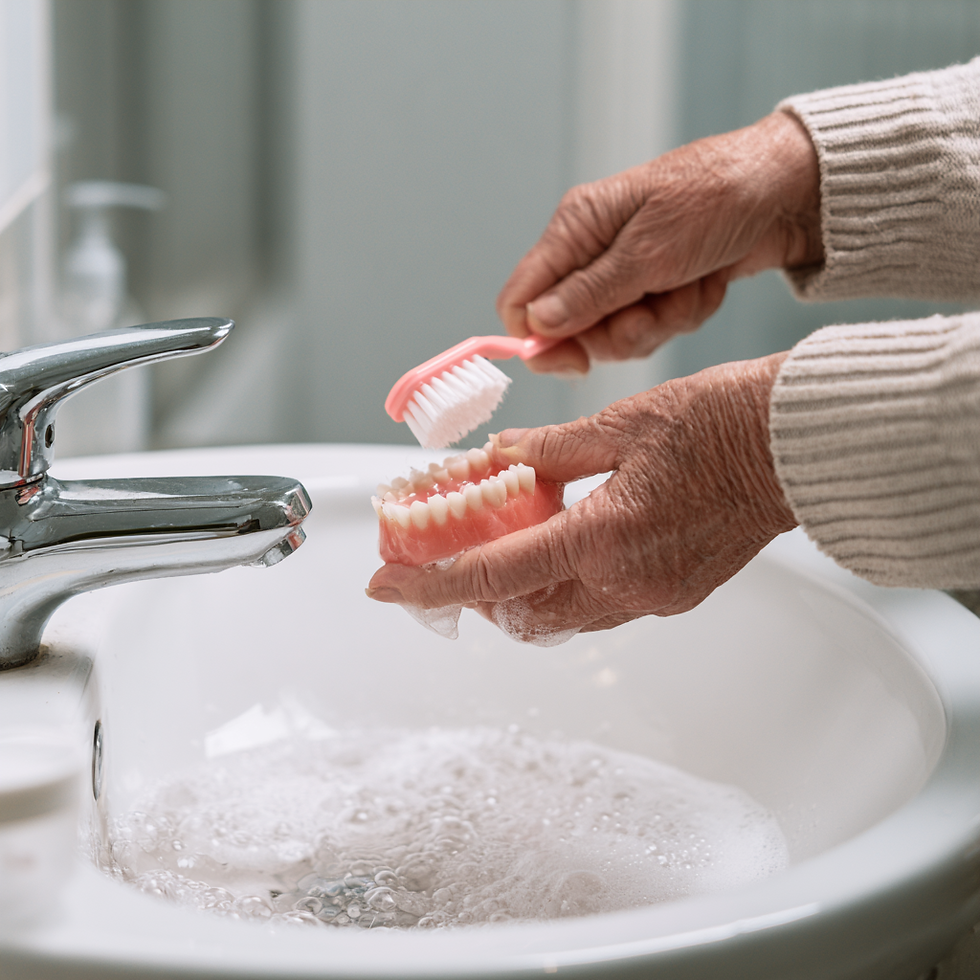
4. Brush the denture. Use a soft brush and an appropriate denture cleanser.
5. Clean your mouth. Gently clean your gums and tongue and brush any remaining natural teeth.
6. Rinse thoroughly. If you use a soaking solution, follow the manufacturer's instructions and rinse the denture before putting it back into your mouth.
7. Store the denture properly. Many removable dentures should be kept moist when they are not being worn to help maintain their shape. (ADA)
For a complete cleaning routine, see our guide: How to Clean Dentures Without Damaging Them: A Spokane Denture Care Guide.
What Should You Avoid When Trying to Remove Denture Odor?
Trying to eliminate odor with harsh household cleaners can damage the denture rather than solve the underlying problem.
Avoid:
Hot or boiling water
Abrasive household cleaners
Powdered cleansers
Aggressive scrubbing
Unapproved chemicals
Leaving adhesive buildup on the denture
Using denture cleansers while the dentures are still in your mouth
The ADA specifically advises against bleach and powdered household cleansers because they can damage dentures. (ADA)
A stronger-smelling cleaner is not necessarily a better cleaner. The goal is to remove buildup without damaging the denture material.
Can Soaking Dentures Help With Odor?
Yes. Proper soaking can be part of an effective denture-care routine.
The ADA notes that soaking dentures in an appropriate cleaning solution can help reduce the bacterial load that may contribute to denture-related odor. (ADA)
However, soaking should not replace brushing.
A good approach is generally:
Remove → rinse → clean → soak according to instructions → rinse thoroughly before wearing.
Always follow the directions for the specific denture cleanser you are using because soaking times and instructions vary between products.
Can an Old Denture Develop More Odor?
An older denture can become more difficult to keep clean, particularly if it has developed cracks, worn surfaces, damaged areas, or changes that allow food and deposits to collect.
This does not mean every older denture needs to be replaced.
However, if you notice persistent odor along with other changes, such as:
Cracks
Chips
Worn denture teeth
Loose fit
Food trapping
Increasing adhesive use
Difficulty cleaning certain areas
Changes in chewing
Persistent irritation
then a professional evaluation may be worthwhile.
The American Dental Association lists cracked, broken, missing, significantly degraded, or poorly fitting dentures among conditions that may indicate a need for professional evaluation for replacement. (ADA)
For more information about older dentures, read Can Old Dentures Be Made Comfortable Again? Adjustments, Relines, and Replacement Options in Spokane, WA.
Can Denture Odor Be a Sign of a Mouth Problem?
Sometimes. Persistent odor should not automatically be blamed on the denture.
Poor denture hygiene can contribute to biofilm accumulation and denture-related stomatitis. The ADA notes that inadequate denture cleaning can contribute to oral problems involving bacteria and fungi. (ADA)
If you have persistent odor along with:
Red or irritated gums
Burning or tenderness
White patches
Swelling
Bleeding
Persistent soreness
Unusual changes in oral tissues
the issue deserves professional attention rather than simply trying stronger cleaning products.
If symptoms are persistent or significant, an appropriate dental or medical evaluation may be necessary to determine the cause.
Why Does My Denture Still Smell After I Clean It?
If your denture still smells after proper cleaning, several possibilities should be considered.
The odor could be coming from:
The denture itself
Adhesive residue
Food trapped beneath the denture
The gums or oral tissues
The tongue
Dry mouth
A denture-related oral condition
An older or damaged denture
A problem unrelated to the denture
This is why simply cleaning the denture more aggressively is not always the answer.
If the odor continues despite good daily hygiene, a professional evaluation can help determine whether the problem involves the denture, the fit, the oral tissues, or another source.
When Should You See a Spokane Denturist About Denture Odor?
Consider scheduling an evaluation if denture odor continues despite consistent cleaning, especially when other problems are present.
A professional evaluation may be appropriate if:
Your dentures smell shortly after cleaning
Food frequently gets trapped underneath
You notice persistent adhesive buildup
Your dentures have cracks or damaged areas
Your dentures have become loose
You have recurring sore spots
Your gums remain irritated
You need increasing amounts of adhesive
Your dentures are difficult to clean properly
The denture is several years old and no longer functions as it once did
A Spokane denturist can evaluate the condition of the denture and help determine whether improved care, professional cleaning, adjustment, reline, repair, or replacement should be considered.
How Can You Keep Dentures Fresh Every Day?
Keeping dentures fresh is less about finding one powerful product and more about developing a consistent routine.
Remember the basics:
Clean your dentures every day
Remove adhesive residue
Clean your gums and tongue
Rinse dentures after meals when practical
Use appropriate denture-cleaning products
Avoid abrasive household cleaners
Never use hot or boiling water
Store dentures properly when they are not being worn
Pay attention to changes in odor, fit, or comfort
Have your dentures professionally evaluated when problems persist
Good denture hygiene can help reduce buildup and keep your dentures feeling cleaner, but it cannot correct a denture that no longer fits properly.
Conclusion

A persistent denture odor is something worth paying attention to, but it does not necessarily mean that your dentures need to be replaced. In many cases, better daily cleaning, adhesive removal, proper soaking, and care of the gums and tongue can make a noticeable difference. When odor continues despite good hygiene—or appears alongside loose fit, food trapping, sore gums, cracks, or other changes—a professional evaluation can help identify the underlying cause. At Grishin Denture Specialist, we help patients in Spokane understand whether their dentures simply need better care or whether professional cleaning, adjustment, reline, repair, or replacement may provide a better long-term solution.
For tips on keeping your dentures clean and fresh, read our guide to how to clean your dentures properly and learn how to care for them every day.
Stay Connected!
Instagram: @grishindentures
Facebook: GrishinDentureSpecialist
Twitter/X: @grishindentures