
What Happens to Old Dentures? Recycling, Repurposing, and Safe Disposal in Spokane, WA
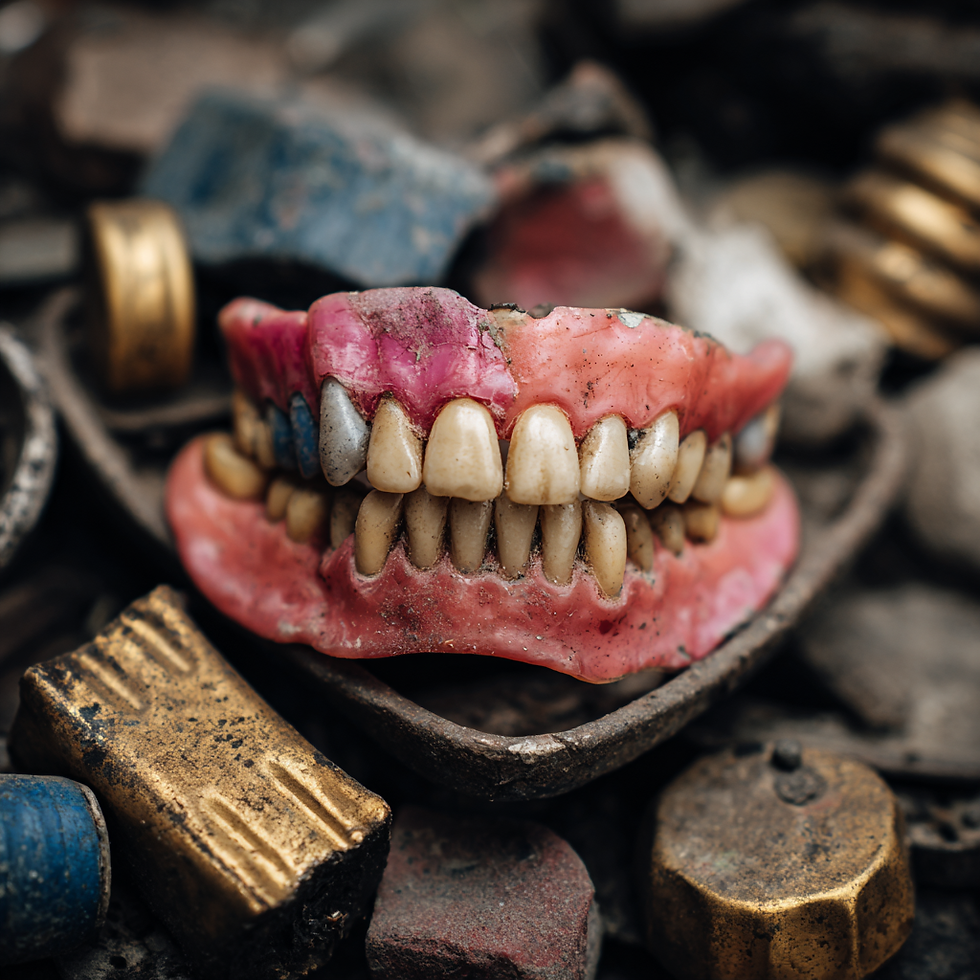
At Grishin Denture Specialist in Spokane, WA, patients often ask a practical question: what should I do with my old dentures after I get a new set?
Old dentures may no longer fit, chew properly, support the face, or feel comfortable. Some are replaced after years of wear, while others become loose after gum shrinkage, bone changes, repairs, relines, or health changes. Because dentures are personal medical devices, many patients are unsure whether they should throw them away, keep them, recycle them, or bring them to their denturist.
The answer depends on the materials, condition, and local disposal options. While old dentures recycling is possible in some specialized situations, most dentures cannot be placed in standard curbside recycling bins. Understanding what dentures are made of — and why they are difficult to recycle — helps patients make safer, more responsible choices.
For patients researching dentures Spokane WA, Spokane dentures, dentures in Spokane, dentures near me, denture clinic near me, or denturist Spokane, this guide explains what happens to old dentures and how to approach disposal in a practical, responsible way.
What Are Dentures Made Of?
To understand old dentures recycling, it helps to first understand the materials used in denture construction. Most modern dentures are not made from one simple recyclable material. They are usually a combination of acrylic, artificial teeth, and sometimes metal reinforcement.
Common denture materials include:
Acrylic resin, also called PMMA: This is the pink base material used in many full dentures. It is strong, lightweight, and biocompatible, but it is not biodegradable.
Composite resin teeth: These are commonly used in modern dentures because they provide a good balance of appearance, strength, and adjustability.
Porcelain teeth: Porcelain is used less often today but may still be found in some older or premium dentures. It is hard, durable, and highly wear-resistant.
Metal frameworks: Partial dentures may include cobalt-chrome, titanium, or other dental alloys. Some full dentures may also include reinforcement for added strength.
Because these materials are bonded together, dentures are difficult to recycle through ordinary household programs. Acrylic may be technically recyclable in industrial settings, but once it is fused with artificial teeth, metal, and patient-specific shaping, it cannot usually be processed like a regular plastic item.
That is why patients should not place old dentures in a household recycling bin unless a specific recycling program confirms that it accepts dental prosthetics.
Can Old Dentures Be Recycled?
Yes, old dentures can sometimes be recycled, but not through standard curbside recycling. Specialized handling is usually required.
The recyclable portion depends on what the denture contains. Metal parts may be easier to recover than acrylic. Some partial dentures contain metal frameworks that can be separated and reclaimed through appropriate metal recovery systems. Dentures with gold attachments, titanium components, or cobalt-chrome frameworks may have materials that can be reused after professional processing.
Acrylic denture bases are more complicated. PMMA acrylic is durable, which is good for long-term denture wear, but it also means the material does not break down naturally. Recycling acrylic denture material requires specialized processing, and access to those programs varies by location.
Porcelain teeth are also not typically recycled back into medical use. In industrial settings, porcelain can sometimes be crushed and repurposed, but this is not something most patients can arrange through local household recycling.
The most accurate answer is this: old dentures recycling is possible in limited specialized settings, but most patients should ask their denturist or dental provider before assuming dentures can be recycled locally.
Can You Throw Old Dentures Away?
In many cases, old dentures are thrown away with regular household trash, especially when no specialized recycling or take-back program is available. However, this is not always the most thoughtful option.
Dentures contain materials that may remain in landfills for a very long time. Acrylic does not biodegrade like natural material. Metal components may remain intact for decades. While one denture may seem small, the environmental impact becomes larger when multiplied across many patients, clinics, and replacement cycles.
There is also a privacy and hygiene concern. Dentures are custom-made medical devices that have been worn in the mouth. If you decide to discard them, they should be handled carefully. Patients may choose to clean and disinfect old dentures before disposal, wrap them securely, and avoid leaving them exposed.
Before throwing away old dentures, it is worth asking a denture clinic whether the set should be kept as a backup, evaluated for repair, or disposed of in a safer way.
Should You Keep Old Dentures as a Backup?
For many patients, keeping an older denture set can be useful. Even if the old dentures are not ideal for daily use, they may help temporarily if a newer set is lost, damaged, or being repaired.
This is especially important for patients who rely on dentures for speaking, eating, facial support, and public confidence. Being without dentures unexpectedly can be stressful,
especially before family events, appointments, travel, or work obligations.
However, old dentures should not be treated as a permanent solution if they are loose, painful, cracked, worn down, or causing sore spots. A poor-fitting denture can irritate gum tissue, affect chewing balance, increase adhesive dependence, and create pressure points.
If you are unsure whether your older denture set is safe to keep as a backup, bring it to Grishin Denture Specialist for evaluation. A denturist can examine the fit, bite, wear pattern, and structural condition to determine whether it is useful, repairable, or ready for disposal.
Can Old Dentures Be Repurposed?
In some cases, old dentures may be repurposed rather than discarded. This depends on the condition of the denture and whether a clinic, dental program, or training facility can use it.
Possible repurposing options may include:
Backup use: Some patients keep old dentures for short-term emergency use.
Educational use: Dental training programs may occasionally use old dentures for teaching, repair practice, or laboratory demonstrations.
Clinical reference: A denturist may examine old dentures to understand what worked, what failed, and what should be improved in the new set.
Material recovery: In limited cases, metal components may be separated and reclaimed.
Patients should not donate or ship old dentures without first confirming that the receiving organization accepts them. Because dentures are used medical devices, not every school, clinic, or charity can accept them.
What Old Dentures Can Reveal About Your Smile
Old dentures can be surprisingly useful during a replacement consultation. Even when they no longer fit, they can show important clues about your bite, chewing habits, facial support, and denture history.
A worn denture may reveal:
Uneven chewing patterns
Flattened or worn-down teeth
Changes in bite height
Loss of facial support
Areas where the denture repeatedly cracked
Pressure points or sore spot patterns
Excessive adhesive use
Poor suction or instability
This information helps a denturist design a better replacement. Instead of simply copying the old denture, the goal is to understand what needs correction. That may include improving the bite, adjusting tooth position, rebuilding facial support, improving suction, or choosing stronger materials.
This connects closely with the importance of long-term design quality. A denture that fits well, functions properly, and lasts longer is often the more sustainable choice because it reduces unnecessary repairs, replacements, and wasted materials.
For more on sustainability in denture care, read Sustainable Smiles: Understanding the Environmental Footprint of Modern Dentures.
How Better Denture Design Reduces Waste
One of the best ways to reduce denture waste is to make dentures that last longer and function better from the beginning. Sustainability is not only about recycling after a denture is replaced. It is also about reducing the need for early replacement.
A well-designed denture may help reduce waste by improving:
Fit and suction
Bite balance
Tooth positioning
Acrylic thickness and strength
Comfort during chewing
Facial support
Long-term durability
Repairability when appropriate
At a Spokane denture clinic, this matters because patients often want dentures that are affordable, comfortable, natural-looking, and durable. Affordable dentures Spokane should not mean rushed, poorly fitting, or disposable. True long-term value comes from dentures that are designed carefully and maintained properly.
Relines, adjustments, repairs, and annual denture checks can also extend the useful life of a denture. When a denture is still structurally sound, maintenance may delay replacement. When the denture is too worn, unstable, or damaged, replacement may become the healthier and more practical option.
Spokane-Specific Denture Disposal Considerations
In Spokane, most household recycling programs are not designed to accept old dentures as recyclable medical devices. Patients should not assume that dentures can go into the blue bin with ordinary plastics.
If you have old dentures, the best first step is to ask your denturist. At Grishin Denture Specialist, patients often bring old dentures to replacement appointments. This allows the denturist to evaluate whether the denture should be kept as a backup, used as a design reference, repaired, relined, or safely discarded.
Patients searching for denture clinics Spokane WA, dentures near me, or a denture clinic near me should look for a provider who discusses the full denture lifecycle — not only the new denture, but also maintenance, replacement timing, and what to do with the old set.
Quick Answers About Old Dentures Recycling
Can old dentures go in the recycling bin?
Usually, no. Most old dentures should not be placed in standard curbside recycling because they contain mixed acrylic, artificial teeth, and sometimes metal.
Are dentures biodegradable?
No. Most modern denture bases are made from acrylic resin, which is durable but not biodegradable.
Should I throw away my old dentures?
You can, but it may be better to ask your denturist first. Old dentures may be useful as a backup, a design reference, or an educational sample.
Can a denturist use my old dentures to make better new dentures?
Yes. Old dentures can show bite wear, tooth position, facial support, cracks, sore spots, and fit problems that help guide the design of a new set.
Is keeping old dentures a good idea?
Often, yes. Keeping an old set as an emergency backup can be helpful, but it should not replace properly fitting daily dentures.
When Old Dentures Should Be Replaced Instead of Repaired
Not every denture is worth saving. Sometimes patients keep old dentures too long because they are used to them, even when the fit has become unhealthy.
Old dentures may need replacement if they:
Rock or move while chewing
Require heavy adhesive every day
Cause recurring sore spots
Look worn, flat, or unnatural
No longer support the lips and cheeks
Crack repeatedly in the same area
Affect speech or confidence
Feel loose after relines or adjustments
No longer match the shape of the gums
If these signs are present, recycling or disposal becomes only part of the conversation. The bigger issue is restoring function, comfort, and confidence with a better-fitting denture.
Patients looking for dentures Spokane, dentures Spokane WA, Spokane dentures, or dentures in Spokane should choose a provider who evaluates the full picture: the old denture, the current gums, the bite, the smile, and the patient’s long-term needs.
Conclusion

Old dentures recycling is possible in some specialized situations, but most dentures cannot be recycled through ordinary household programs. Because dentures are made from acrylic resin, artificial teeth, and sometimes metal frameworks, they require special handling if materials are going to be recovered. For many patients, the best next step is to ask a denturist whether the old denture should be kept as a backup, used as a reference, repaired, relined, or safely discarded.
At Grishin Denture Specialist, responsible denture care goes beyond making a new set. We help patients understand when old dentures are no longer serving their health, how worn dentures affect comfort and bite balance, and how better materials, fit, and maintenance can reduce unnecessary replacement. Whether you are replacing worn acrylic dentures, considering stronger premium materials, or exploring a more stable denture solution, the goal is always long-term comfort, function, and value.
Serving Spokane, Spokane Valley, Cheney, Deer Park, and Liberty Lake, we help patients who are searching for affordable dentures Spokane, Affordable Dentures Spokane, dentures Spokane, dentures Spokane WA, Spokane dentures, dentures in Spokane, Dentures near me, dentures near me, Denture clinic near me, denture clinic near me, denture clinics Spokane WA, denturist Spokane, or a trusted Spokane denture clinic. With the right guidance, you can protect your smile, make smarter decisions about old dentures, and reduce waste whenever possible.
For patients interested in eco-conscious denture care, our guide on sustainable dentures in Spokane explains how materials, longevity, repairs, and proper disposal all affect the environmental footprint of a smile.
Stay Connected!
Instagram: @grishindentures
Facebook: GrishinDentureSpecialist
Twitter/X: @grishindentures


