Why Dentures Rub Your Gums: Sore Spot Causes and Spokane Denture Solutions
Updated: Aug 19
Written by the Grishin Denture Specialist laboratory team, with clinical guidance from Michael Grishin, DN, Licensed Denturist.

Dentures should not constantly rub, pinch, or create painful sore spots. Some tenderness can happen during the early adjustment period, especially with new dentures, but ongoing gum irritation usually means the denture needs professional attention.
When dentures rub the gums, the cause may be a pressure point, poor suction, gum shrinkage, overextended borders, uneven bite pressure, dry mouth, or a denture that no longer fits properly. At Grishin Denture Specialist, we help patients searching for dentures Spokane, dentures Spokane WA, Spokane dentures, dentures in Spokane, and dentures near me understand why soreness happens and what can be done to restore comfort.
A comfortable denture should distribute pressure evenly. When pressure becomes concentrated in one spot, the gums can become red, tender, swollen, or painful.
Why Do Dentures Rub the Gums?
Dentures rub the gums when they move too much, press unevenly, extend too far, or no longer match the shape of the gum ridge.
The gums are living tissue. They can tolerate gentle, even pressure, but they do not tolerate repeated friction well. When a denture slides, rocks, tips, or presses too strongly into one area, the tissue can become irritated.
Common reasons dentures rub include:
Loose denture fit
Gum and bone shrinkage
Uneven bite pressure
Overextended denture borders
Poor suction
Food trapped underneath the denture
Sharp or rough acrylic areas
Dry mouth
Worn denture teeth
Dentures that need an adjustment, reline, or replacement
For patients looking for a denture clinic near me, the key is identifying the cause. A sore spot should not simply be ignored or covered with extra adhesive.
Are Sore Spots Normal With New Dentures?
Some soreness can be normal with new dentures, but sharp pain, recurring sores, or irritation that does not improve should be evaluated.
New dentures often need follow-up adjustments as the gums, cheeks, lips, and tongue adapt. Even when dentures are made carefully, the mouth may reveal pressure areas after real-life use during chewing and speaking.
However, soreness should gradually improve with proper care. If the same spot hurts every day, or if the pain becomes worse, it may be a sign of a pressure point, bite imbalance, or fit issue.
Warning signs that soreness is not just normal adjustment include:
Pain in the same spot every time you wear the denture
Gum redness that does not improve
A sore that looks raw or ulcer-like
Denture movement while speaking
Pain when chewing on one side
Needing extra adhesive to reduce rubbing
Dentures that feel loose or unstable
A trusted Spokane denture clinic can evaluate whether a small adjustment is enough or whether the denture needs a deeper fit correction.
How Does a Loose Denture Cause Gum Rubbing?
A loose denture can slide against the gums during chewing, speaking, swallowing, or laughing. This repeated movement creates friction, which can lead to sore spots.
Loose dentures often happen because the gums and jawbone change shape over time. After tooth loss, the ridge that supports the denture gradually remodels. As the mouth changes, the denture may no longer fit as closely as it once did.
Signs of a loose denture include:
Denture slipping during speech
Food getting trapped underneath
Weak suction
Clicking while chewing
Rocking from side to side
Needing more adhesive than before
Gum soreness after meals
A denture that lifts when laughing or talking
If looseness is caused by gum shrinkage, a reline may help restore closer contact between the denture base and the gums. For more on fit and suction, read How Denture Suction Really Works — The Hidden Physics Behind a Secure, Comfortable Fit.
Can an Uneven Bite Cause Sore Gums?
Yes. An uneven bite can create sore gums by forcing too much pressure onto one area of the denture.
Sometimes the denture base may look smooth, but the bite is still pushing the denture unevenly. When the upper and lower teeth do not meet correctly, the denture may twist, tip, or drive pressure into one part of the gum ridge.
An uneven bite may cause:
Soreness on one side
Denture rocking
Clicking during chewing
Tender gums after eating
Pressure that returns after adjustment
Difficulty chewing evenly
A feeling that one side hits first
This is why sore spot treatment should include bite evaluation, not just smoothing the acrylic. For a deeper explanation, read Hidden Bite Forces: How Uneven Pressure Damages Your Gums and Dentures Over Time.
Can Dry Mouth Make Dentures Rub More?
Yes. Dry mouth can make dentures rub more because saliva helps create a protective layer between the denture and the gums.
When the mouth is dry, friction increases. The denture may feel less secure, and the tissue may become more vulnerable to irritation. Spokane’s dry climate can make this problem more noticeable for some denture wearers, especially when combined with medications, dehydration, mouth breathing, allergies, or nighttime denture wear.
Dry mouth may cause:
Burning or tender gums
Dentures that feel rougher
Reduced suction
More friction during speech
Bad breath
Difficulty swallowing
Denture movement
Increased adhesive use
If your denture fit changes from morning to evening, read Why Dentures Feel Tight in the Morning and Loose by Evening.
Can Food Trapped Under Dentures Cause Sore Spots?
Yes. Food particles trapped under dentures can press into the gums and create irritation.
Even small crumbs can feel painful when they are trapped between the denture base and the tissue. Hard or sharp food particles may create pressure points that feel like the denture itself is cutting into the gums.
Food trapping often happens when:
Dentures are loose
Suction is weak
The denture border does not seal well
Gum shrinkage has changed the fit
The bite causes the denture to rock
The denture needs a reline
If food trapping becomes frequent, it is usually a sign that the fit should be checked. A denture should not constantly allow food to collect underneath during normal meals.
What Should You Do If Dentures Rub Your Gums?
If dentures rub your gums, remove them when possible, rinse your mouth, clean the denture, avoid wearing them overnight, and schedule a professional evaluation if soreness continues.
Helpful steps include:
Remove the denture to let the tissue rest
Rinse with warm saltwater
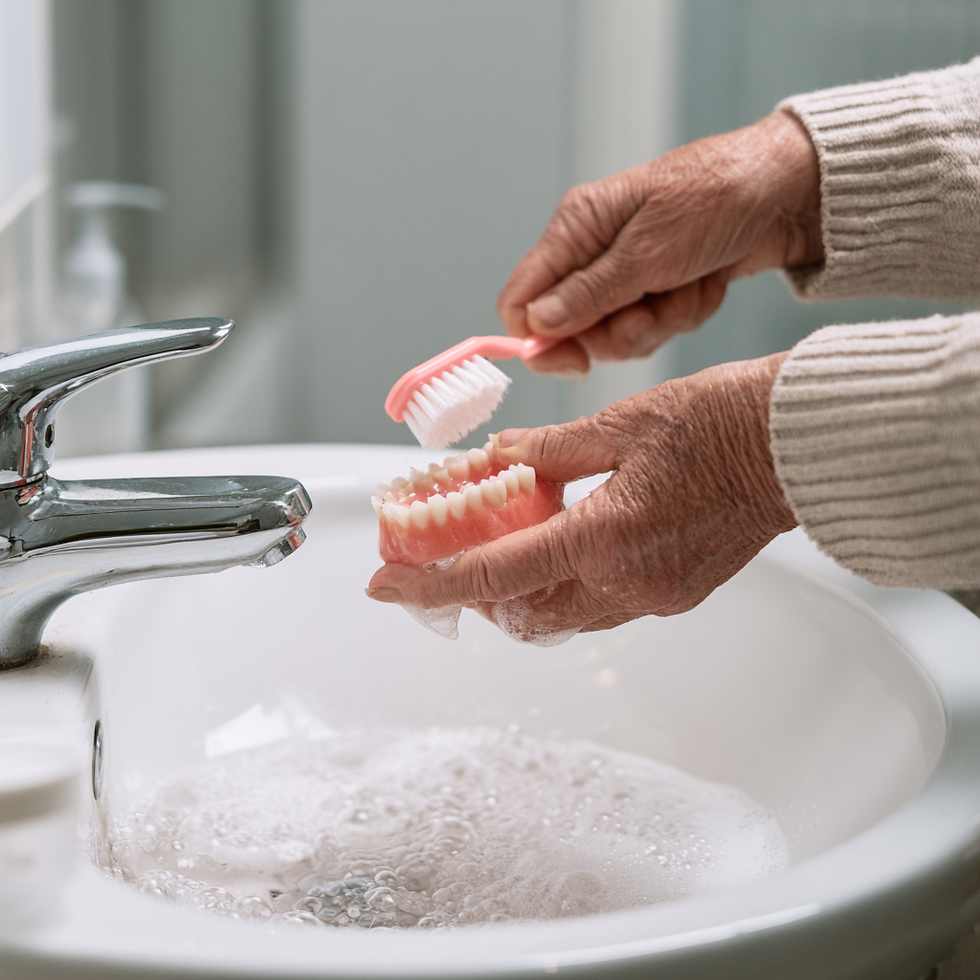
Clean the denture thoroughly
Brush the gums gently with a soft toothbrush
Avoid hard, sharp, or spicy foods while sore
Do not sleep in the denture unless instructed otherwise
Do not use extra adhesive to cover pain
Schedule an adjustment if soreness lasts more than a couple of days
Do not grind, file, trim, or heat the denture at home. Home adjustments can ruin the fit, weaken the acrylic, damage suction, and injure the gums.
Does Adhesive Help Denture Rubbing?
Adhesive may temporarily reduce movement in some cases, but it should not be used to hide pain or compensate for a poor fit.
If your dentures rub because they are loose, adhesive may make them feel more secure for a short time. However, if the denture no longer matches the gums, adhesive does not fix the underlying problem. It may also create buildup that becomes difficult to clean.
Using more adhesive over time may be a sign that you need an adjustment, reline, or new denture evaluation. For more on this issue, read Denture Adhesive Residue: When Is Too Much Adhesive a Problem?.
Do Sore Spots Mean You Need New Dentures?
Not always. Some sore spots can be corrected with precise adjustments. If the denture is loose because the gums have changed, a reline may help. If the denture is worn, unstable, or poorly designed, replacement may be the better long-term solution.
A professional denturist Spokane can determine whether the problem is caused by:
Pressure points
Overextended borders
Gum shrinkage
Bite imbalance
Poor suction
Worn denture teeth
Rough acrylic
Food trapping
Old denture base fit
Incorrect tooth position
Dentures that need replacement
Patients comparing denture clinics Spokane WA should look for a provider who evaluates the cause of the sore spot, not just the sore spot itself.
How Can Denture Sore Spots Be Prevented?
Denture sore spots can often be prevented with good hygiene, regular fit checks, early adjustments, proper gum care, and stable denture design.
Daily prevention includes:
Clean dentures every day
Brush gums, tongue, cheeks, and palate gently
Remove dentures at night unless instructed otherwise
Stay hydrated
Avoid sleeping in loose dentures
Schedule fit checks when looseness begins
Avoid do-it-yourself repairs
Do not ignore recurring sore spots
Keep up with professional denture cleanings and adjustments
Patients searching for affordable dentures Spokane or Affordable Dentures Spokane should remember that long-term value depends on fit, function, comfort, and maintenance—not just the initial denture cost.
Why Accurate Fit Matters for Gum Comfort
Accurate denture fit matters because the denture base must match the gums closely enough to distribute pressure evenly.
At Grishin Denture Specialist, we use traditional alginate impressions because they allow careful control of soft-tissue detail. We have tested digital and 3D-printed methods, but our experience has shown that traditional techniques provide better control, accuracy, and definition for many denture cases.
This matters because sore spots often develop when pressure is not evenly distributed. A denture that fits closely, seals properly, and balances chewing forces can help reduce movement, rubbing, food trapping, and gum irritation.
A precise fit can help improve:
Suction
Stability
Chewing comfort
Speech confidence
Reduced sore spots
Better tissue support
Less food trapping
More comfortable daily wear
For more detail on why fit matters, read The Science of a Perfect Denture Fit.
When Should You Visit a Denture Clinic for Gum Rubbing?
You should visit a denture clinic if gum soreness lasts more than a couple of days, keeps returning, worsens during chewing, or is linked to looseness, clicking, food trapping, or increased adhesive use.
Schedule a denture check if you notice:
Sore spots that keep coming back
Gum redness or swelling
Pain while chewing
Dentures sliding during speech
Food trapped under the denture
Dentures clicking or rocking
Increased adhesive use
Reduced suction
A denture edge that feels sharp
A change in how the denture fits
A proper evaluation should include the denture base, borders, bite, suction, tissue health, and denture wear. That is how the real cause of soreness is found.
FAQ: Dentures Rubbing the Gums
Why do my dentures rub my gums?
Dentures may rub your gums because they are loose, uneven, overextended, poorly balanced, or no longer shaped to fit your gum ridge. Dry mouth and food trapping can also increase irritation.
Are sore spots normal with new dentures?
Mild tenderness can be normal at first, but sharp pain, recurring sores, or soreness that does not improve should be checked by a denturist.
Can loose dentures cause gum sores?
Yes. Loose dentures can slide and rub against the gums, creating friction, redness, tenderness, and sore spots.
Can a reline stop dentures from rubbing?
A reline may help if the rubbing is caused by gum shrinkage or a loose denture base. If the problem is bite imbalance, tooth position, or overextended borders, other adjustments may be needed.
Should I use more adhesive if dentures rub?
No. Extra adhesive may temporarily reduce movement, but it should not be used to cover pain. Persistent rubbing should be professionally evaluated.
Can I file my denture at home?
No. Filing or trimming dentures at home can damage the denture, weaken the acrylic, ruin suction, and injure the gums.
When should I see a denturist for sore gums?
You should schedule a visit if soreness lasts more than a couple of days, returns in the same spot, causes difficulty eating, or is associated with looseness, clicking, or food trapping.
Conclusion

Dentures rub the gums when fit, suction, bite balance, tissue health, or denture design is not working properly. Persistent sore spots should not be ignored because they can affect eating, speech, confidence, and long-term gum comfort. The right solution depends on the cause: a small adjustment, a reline, bite correction, professional cleaning, or a better-fitting new denture.
At Grishin Denture Specialist, we help patients throughout Spokane, Spokane Valley, Cheney, Deer Park, Liberty Lake, and surrounding communities find relief from denture soreness through careful evaluations, precise adjustments, relines, and handcrafted dentures when needed. Denturist Michael Grishin focuses on comfort, stability, suction, bite balance, and precise fit so dentures feel more natural in daily life.
If you are searching for dentures Spokane, dentures Spokane WA, Spokane dentures, dentures in Spokane, dentures near me, denture clinic near me, denture clinics Spokane WA, affordable dentures Spokane, denturist Spokane, or a trusted Spokane denture clinic, visit Grishin Denture Specialist to restore comfort before soreness becomes a bigger problem.
Stay Connected!
Instagram: @grishindentures
Facebook: GrishinDentureSpecialist
Twitter/X: @grishindentures