Full vs. Partial Dentures: Which Option May Be Right for You in Spokane, WA?
Updated: 6 days ago
Written by the Grishin Denture Specialist laboratory team, with clinical guidance from Michael Grishin, DN, Licensed Denturist.

Choosing between full and partial dentures depends on how many teeth are missing, the condition of the remaining natural teeth, the health of the gums and supporting tissues, and what you want to accomplish with your treatment. The right option is not simply the one that replaces the most teeth. It is the option that can provide the most appropriate combination of function, comfort, appearance, and long-term support.
At Grishin Denture Specialist, we help patients searching for full vs partial dentures, dentures Spokane, dentures Spokane WA, Spokane dentures, dentures in Spokane, and a trusted Spokane denturist understand the differences between these options and what may be appropriate for their individual situation.
If you are unsure whether you need a full or partial denture, a professional examination is the best place to start.
What Is the Difference Between Full and Partial Dentures?
The main difference between full and partial dentures is whether a patient has remaining natural teeth that can be used as part of the overall treatment.
Full dentures are generally used when all of the natural teeth in an arch are missing or need to be replaced.
Partial dentures are used when some natural teeth remain and additional teeth need to be replaced.
The choice is not based solely on the number of missing teeth. The condition, position, and long-term prognosis of the remaining teeth also matter.
Full dentures may replace:
All upper teeth
All lower teeth
All teeth in both arches
Partial dentures may replace:
Several missing teeth
Multiple teeth in different areas
Teeth missing between remaining natural teeth
Teeth missing toward the back of the mouth
A combination of strategically missing teeth
The goal is to create a prosthesis that works with the patient's existing mouth rather than simply filling empty spaces.
When Are Full Dentures Used?
Full dentures may be considered when all of the natural teeth in an upper or lower arch are missing or when the remaining teeth cannot provide a predictable foundation for continued function.
A full denture replaces the missing teeth and also provides a base that rests against the supporting oral tissues.
Full dentures may help restore:
Chewing function
Speech
Tooth appearance
Lip support
Facial support
Smile confidence
The ability to eat a wider variety of foods
Upper and lower full dentures do not necessarily behave the same way. Upper dentures generally have more surface area and can use the palate to help create retention, while lower dentures have less surface area and must work around the tongue and floor of the mouth.
For more information about lower denture stability, read Why Lower Dentures Are Harder to Stabilize Than Upper Dentures in Spokane, WA.
When Are Partial Dentures Used?
Partial dentures may be considered when a patient still has natural teeth but is missing enough teeth that replacement is needed to improve function, appearance, or both.
A partial denture can replace missing teeth while fitting around the natural teeth that remain.
Depending on the case, a partial denture may help:
However, not every remaining tooth is automatically suitable to support or work alongside a partial denture. The remaining teeth and surrounding tissues need to be evaluated.
This is one reason a consultation is important before deciding which type of denture is appropriate.
Is a Partial Denture Better Than a Full Denture?
Not necessarily. A partial denture is not automatically better simply because some natural teeth remain.
The condition of the remaining teeth matters.
If the remaining teeth are healthy and provide a stable foundation, preserving them may allow a partial denture to be a useful treatment option. If remaining teeth are severely compromised, however, attempting to build treatment around them may not provide a predictable long-term result.
A professional evaluation can help determine whether the remaining teeth can reasonably be incorporated into the treatment plan.
The goal should be predictable function and long-term comfort, not simply preserving a tooth because it is still present.
Can You Get Partial Dentures With Only a Few Teeth Missing?
Yes. A partial denture can replace one or several missing teeth depending on the patient's needs and the design of the appliance.
The location of the missing teeth is important.
For example, replacing several teeth in different areas of the mouth may require a different design than replacing a group of teeth in one area.
The denturist must consider:
Which teeth are missing
Which teeth remain
The position of the remaining teeth
Gum and tissue support
Bite relationships
Available space
Appearance
How the partial will be inserted and removed
How chewing forces will be distributed
A partial denture should be designed around the entire mouth rather than simply around the empty spaces.
Are Full Dentures More Comfortable Than Partial Dentures?
Comfort depends on many factors and cannot be determined simply by whether a denture is full or partial.
A well-designed partial denture can be comfortable and stable, while a poorly fitting appliance can be uncomfortable regardless of its type.
Comfort can be influenced by:
Accurate impressions
Denture design
Fit
Tooth position
Bite balance
Gum and tissue condition
Remaining natural teeth
Denture borders
Patient adaptation
Proper follow-up adjustments
This is why choosing the right provider matters as much as choosing the type of denture.
For more information about what happens during an initial visit, read Your First Denture Consultation in Spokane: What to Expect at Grishin Denture Specialist.
Do Partial Dentures Feel Different From Full Dentures?
Yes. Partial and full dentures can feel different because they interact with the mouth in different ways.
A partial denture works around existing natural teeth. Depending on its design, patients may notice areas where the denture contacts or connects with those teeth.
A full denture rests on the supporting oral tissues and replaces the entire set of teeth in that arch.
Both require an adjustment period.
Patients may initially notice differences in:
Speech
Chewing
Tongue movement
Food awareness
Saliva flow
Denture awareness
Confidence while eating
These sensations often become easier to manage as the patient adapts, but persistent pain, instability, or difficulty functioning should be evaluated rather than simply endured.
Which Is Easier to Clean: Full or Partial Dentures?
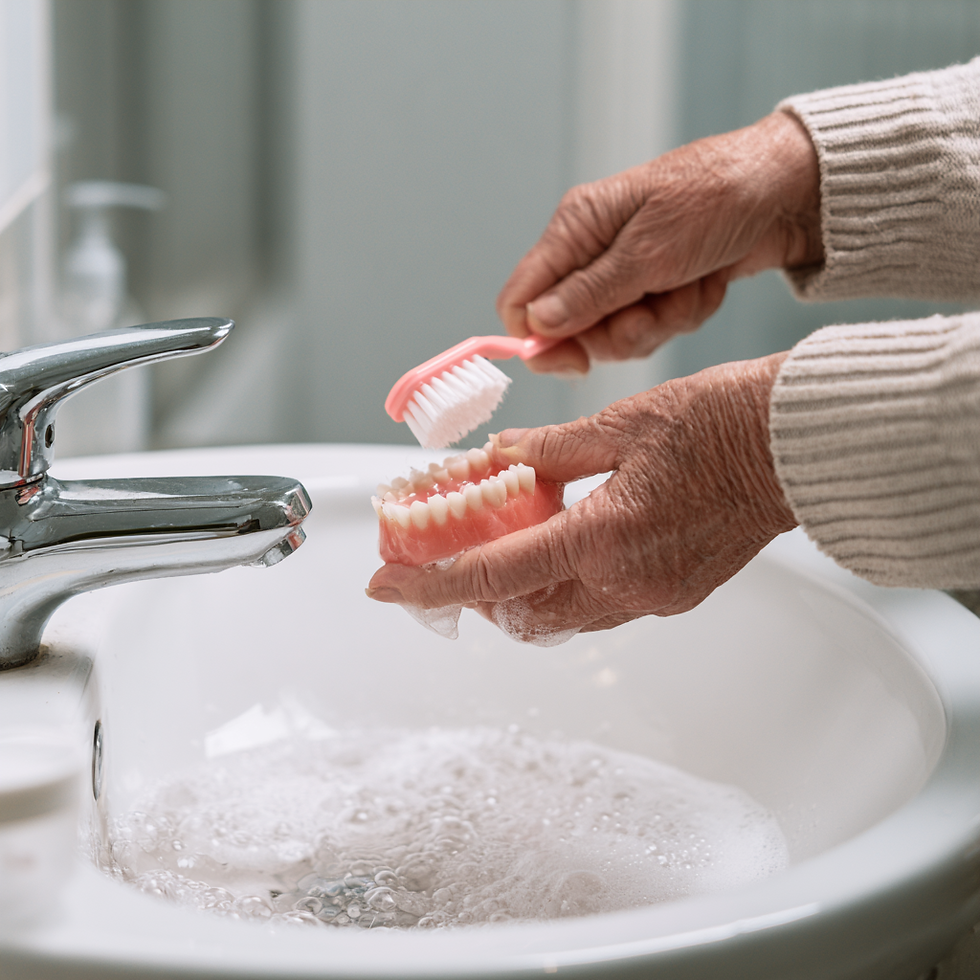
Both full and partial dentures require regular cleaning, but partial dentures can require additional attention because they interact with remaining natural teeth.
With a partial denture, you need to care for both the removable appliance and the natural teeth that remain.
Good care may include:
Removing the denture as directed
Cleaning the denture regularly
Cleaning around remaining natural teeth
Cleaning the gums and tongue
Removing adhesive or other buildup when applicable
Following individualized instructions for storage
Keeping the appliance clean is important, but so is maintaining the health of the remaining natural teeth.
For a detailed cleaning routine, read How to Clean Dentures Without Damaging Them: A Spokane Denture Care Guide.
Do Full and Partial Dentures Need Different Types of Care?
They can. The basic principles of denture hygiene apply to both, but partial dentures require additional attention to the natural teeth and tissues surrounding the appliance.
A partial denture may have areas where food and plaque collect around remaining teeth. Those areas need careful cleaning.
Full dentures do not have natural teeth underneath them, but the gums and oral tissues still need to be cleaned regularly.
Your denturist can provide specific care instructions based on your appliance and oral condition.
Can Partial Dentures Improve Chewing?
Yes. Replacing missing teeth with a properly designed partial denture can improve chewing function for many patients.
Missing teeth can make it harder to break down food comfortably. Patients may compensate by chewing on one side or avoiding certain foods.
A partial denture can restore missing tooth positions and provide additional chewing surfaces.
However, the result depends on the design, fit, remaining teeth, bite relationship, and supporting tissues.
If chewing continues to feel uneven after receiving a denture, that should be evaluated rather than assumed to be a permanent limitation.
Can Full Dentures Restore Your Smile and Facial Support?
Yes. Full dentures can replace missing teeth while also helping support the lips and facial tissues.
Tooth position, denture base shape, vertical dimension, and overall design can influence how the lips and face appear.
A denture should not simply fill the spaces where teeth used to be. It should be designed to work with the patient's facial features and oral anatomy.
However, every patient has different anatomical limitations. A professional consultation is important when appearance and facial support are major goals.
For more information about how denture design can affect appearance, read Why Dentures Push the Lips Out | Spokane Denturist.
Can You Switch From Partial Dentures to Full Dentures Later?
Yes, in some situations. A patient who currently wears a partial denture may eventually need a different treatment if additional natural teeth are lost or their condition changes.
This does not mean every partial denture will eventually become a full denture.
The future depends on factors such as:
The health of remaining teeth
Gum and bone support
Oral hygiene
Bite forces
Changes in overall health
The condition of the existing appliance
How well the remaining teeth can continue to function
Regular professional evaluations can help identify changes before they become unexpected problems.
How Do You Know Which Denture Is Right for You?
The best way to determine whether a full or partial denture is appropriate is through a professional examination and consultation.
A denturist can evaluate:
Missing teeth
Remaining natural teeth
Gum and tissue condition
Jaw relationships
Bite
Available support
Facial appearance
Chewing needs
Existing dentures
Your personal goals
There is no single denture solution that is right for everyone.
For some patients, preserving natural teeth and using a partial denture may make sense. For others, a full denture may provide a more predictable long-term solution.
The important thing is understanding why a particular option is being recommended.
What Should You Ask During a Denture Consultation?
If you are deciding between full and partial dentures, consider asking:
Which option is appropriate for my mouth?
Can my remaining teeth support a partial denture?
What are the advantages and limitations of each option?
How will each option affect chewing?
How will each option affect appearance?
What type of maintenance will be required?
What will the adjustment period be like?
Could my treatment needs change in the future?
What alternatives should I consider?
What will the total treatment cost be?
A good consultation should give you enough information to make a decision without feeling pressured.
At Grishin Denture Specialist, our goal is to explain what can realistically be accomplished and help you understand your options.
Full vs. Partial Dentures: Which Is Right for You?
There is no universal answer to full vs partial dentures. The right choice depends on the condition of your remaining teeth, the health of your gums and supporting tissues, your bite, your functional needs, and your long-term goals.
A partial denture may be appropriate when remaining teeth can provide a healthy and dependable foundation. A full denture may be more appropriate when all teeth in an arch are missing or when remaining teeth cannot provide predictable support.
The decision should be based on a thorough evaluation—not simply on how many teeth are missing.
If you are considering dentures in Spokane, a consultation with a licensed denturist can help you understand which options may be appropriate for your individual situation.
Conclusion

Choosing between full and partial dentures is an important decision because the right appliance should work with your mouth, bite, remaining teeth, and daily needs. A partial denture may allow you to replace missing teeth while maintaining healthy natural teeth, while a full denture may provide a more predictable solution when an entire arch needs replacement. Neither option is automatically better for everyone. At Grishin Denture Specialist, we take the time to evaluate your individual situation, explain your options, and help you understand what can realistically be accomplished. The goal is a denture solution that supports comfort, function, appearance, and confidence for everyday life in Spokane.
If your dentures are cracked, broken, or damaged, learn more about professional denture repair options and how a Spokane denturist can help restore their fit, function, and comfort.
Stay Connected!
Instagram: @grishindentures
Facebook: GrishinDentureSpecialist
Twitter/X: @grishindentures