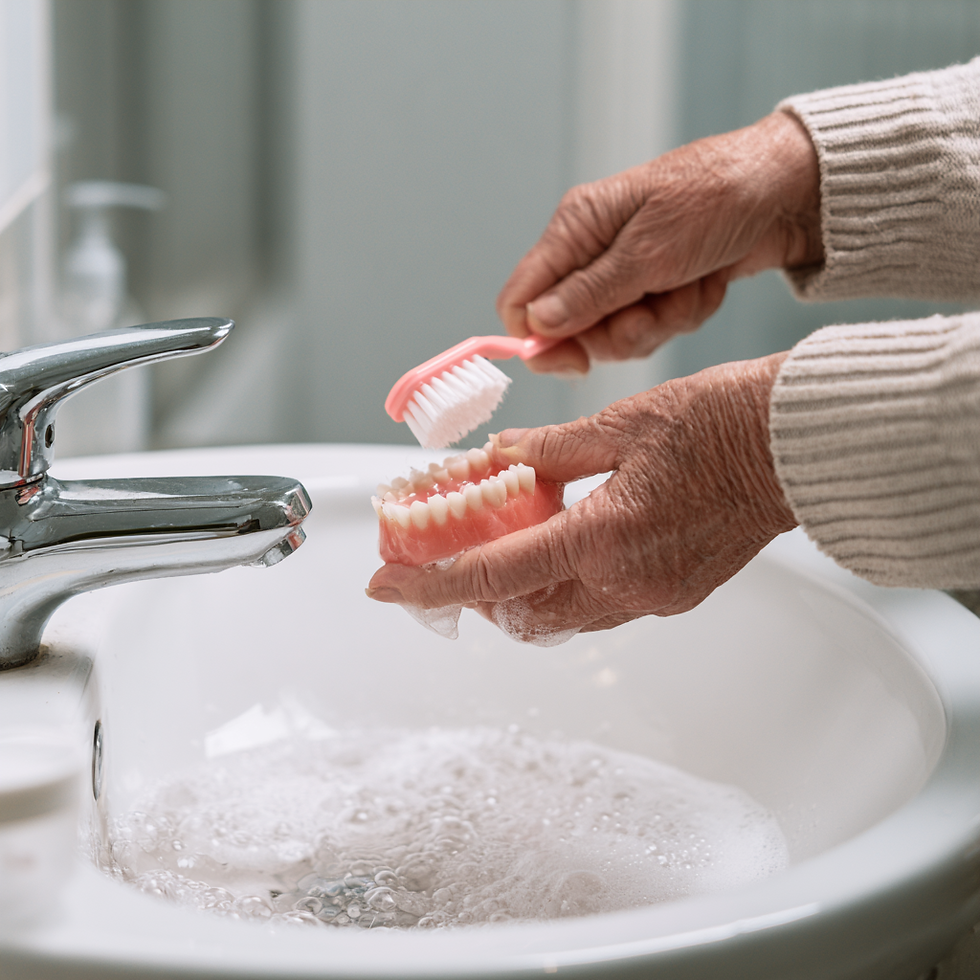
How to Store Dentures Safely When You’re Not Wearing Them: Spokane Denture Care Guide
Written by the Grishin Denture Specialist laboratory team, with clinical guidance from Michael Grishin, DN, Licensed Denturist.

Knowing how to store dentures properly is an important part of protecting them between meals, overnight, while traveling, or anytime they are not being worn. Dentures can be damaged by heat, drying out, accidental drops, or improper cleaning products.
Proper storage is not complicated, but small habits can make a difference. Removable dentures should be kept clean, protected from damage, and stored according to the instructions appropriate for the specific appliance.
At Grishin Denture Specialist, we help patients searching for dentures Spokane, dentures Spokane WA, Spokane dentures, dentures in Spokane, and a trusted Spokane denturist understand how proper denture care can help protect comfort, function, and the condition of the appliance.
How Should You Store Dentures When You Are Not Wearing Them?
The best way to store removable dentures is to keep them in a safe container with water or an appropriate denture-soaking solution when they are not being worn, unless your denture manufacturer or denturist has given you different instructions.
The American Dental Association explains that placing dentures in water or an appropriate denture cleanser solution when they are not being worn can help them retain their shape and prevent them from drying out. (Ada Association)
A good storage routine includes:
Remove the dentures carefully
Clean them before storage
Use a clean denture container
Keep the dentures moist as directed
Keep the container in a safe location
Avoid hot water
Keep the container clean
Follow any individualized instructions from your denturist
The goal is simple: keep the denture clean, moist, protected, and easy to find.
Should Dentures Be Stored in Water?
Generally, removable dentures should be kept moist when they are not being worn.
Water can help prevent the denture material from drying out and changing shape. The ADA specifically recommends placing dentures in water or a denture cleanser solution when they are not being worn. (Ada Association)
However, the exact storage method can depend on the type of denture and its materials.
If you use a denture cleanser, follow the product's instructions regarding:
Amount of cleanser
Water temperature
Soaking time
Rinsing requirements
Whether overnight soaking is recommended
When there is uncertainty, follow the instructions provided for your specific denture or ask your denturist.
Can Dentures Dry Out?
Yes. Dentures can dry out when they are left exposed to air for extended periods.
Drying can affect the denture material and may contribute to changes in shape. That is one reason appropriate moisture is important during storage. (Ada Association)
Avoid leaving dentures:
On a dry countertop overnight
On a nightstand uncovered
Wrapped in a dry paper towel
In direct sunlight
Near a heater
In a hot vehicle
If you are not wearing your dentures, place them in their appropriate storage container rather than leaving them exposed.
Can Hot Water Damage Dentures?
Yes. Hot or boiling water can damage dentures.
The ADA specifically warns that dentures should never be placed in hot or boiling water because heat can cause them to warp. (Ada Association)
This is particularly important because a denture that changes shape may no longer fit the mouth the same way.
Instead of using very hot water, follow the instructions for your denture cleanser or use appropriately warm water when recommended.
A simple rule is:
Warm—not hot or boiling—is the safer approach unless your specific product instructions say otherwise.
What Kind of Container Should You Use for Dentures?
A dedicated denture container is generally a better choice than leaving dentures loose on a countertop or wrapping them in tissue.
A suitable container should:
Be large enough for the denture
Have a secure lid
Be easy to clean
Allow the denture to remain appropriately covered
Be stored somewhere safe from accidental drops
Labeling the container may also be useful for older adults, caregivers, or people who have multiple removable appliances.
The container itself should be cleaned regularly. A dirty storage container can work against your denture-cleaning routine.
Can You Leave Dentures in a Glass of Water Overnight?
Yes, water can be used for storing many removable dentures overnight, but the exact instructions for your appliance should be followed.
If you use plain water, start with a clean container and fresh water rather than repeatedly using the same water.
If you use a denture cleanser, follow the product's instructions instead of assuming that every cleanser should be left overnight.
The ADA notes that commercial denture cleansers can help reduce biofilm and microorganisms associated with denture-related problems, but soaking times should follow the manufacturer's directions. (Ada Association)
Should You Clean Dentures Before Storing Them?
Yes. Cleaning dentures before storage helps remove food particles, adhesive, plaque, and other buildup.
Storing a dirty denture does not make the buildup disappear. It simply leaves the deposits sitting against the denture surface for longer.
Before storing your dentures:
Remove them from your mouth.
Rinse away loose food.
Remove adhesive residue.
Gently brush the denture with an appropriate cleanser.
Rinse thoroughly.
Place the denture into its appropriate storage solution or water.
For a more detailed cleaning routine, read How to Clean Dentures Without Damaging Them: A Spokane Denture Care Guide.
Can Improper Denture Storage Affect Denture Fit?
It can. Dentures are designed to maintain a specific shape so they can fit the mouth properly.
Heat, drying, damage, or changes to the denture material can potentially affect how the appliance fits.
A denture that no longer fits properly may begin to:
Move while speaking
Rock while chewing
Trap food
Lose suction
Rub the gums
Require more adhesive
However, not every fit problem is caused by storage. The mouth itself naturally changes after tooth loss, and gum and bone changes can alter the fit over time.
If your dentures have gradually become loose, see How Gum Shrinkage Changes Denture Fit Over Time in Spokane, WA.
Where Is the Safest Place to Store Dentures?
The safest location is somewhere clean, stable, and protected from accidental damage.
Avoid storing dentures where they can easily be knocked onto the floor.
This is particularly important in households with:
Young children
Pets
Multiple caregivers
Busy bathrooms
Shared countertops
Dogs and other pets can be surprisingly interested in dentures, so a closed container placed somewhere inaccessible to pets is a much safer choice.
A bathroom counter may be convenient, but convenience should not come at the expense of accidentally dropping or losing the denture.
How Should You Store Dentures While Traveling?
Travel requires the same basic principles as home storage: keep the denture clean, moist when appropriate, protected, and easy to identify.
When traveling, consider bringing:
A sturdy denture container
Your usual denture cleanser
A denture brush
A small supply of any adhesive you normally use
A towel for handling the denture safely
Avoid placing dentures loose inside luggage, wrapped in clothing, or in a pocket.
A dedicated container helps protect the appliance from crushing, dropping, or accidental loss.
If you are traveling with dentures, it is also helpful to keep them in your carry-on rather than checked luggage when flying.
Can You Wrap Dentures in a Paper Towel?
It is better not to use a dry paper towel as long-term denture storage.
One common problem is that someone may forget the denture is wrapped inside the towel and accidentally throw it away.
A paper towel also does not provide the same protection as a proper denture container.
For temporary handling, a towel may help protect the denture from a hard surface, but for storage, a dedicated container is a better option.
What Should You Avoid When Storing Dentures?
Several simple mistakes can damage or complicate denture care.
Avoid:
Hot or boiling water
Leaving dentures completely dry for extended periods
Storing them loose on a countertop
Placing them near heaters
Leaving them in direct sunlight
Using an unclean storage container
Wrapping them where they can accidentally be discarded
Allowing pets or children access to them
Using cleaning solutions outside their intended instructions
The biggest storage rule is simple:
Protect the denture from heat, drying, impact, and contamination.
Should Dentures Be Stored Out of the Mouth at Night?
For many patients, removable dentures are generally removed at night so the oral tissues can rest, unless a dental professional has specifically instructed otherwise.
The ADA notes that removable prostheses should be removed, inspected, and cleaned before bed, with the appliance returned to the mouth in the morning as part of oral care recommendations. (Ada Association)
Your individual situation may be different, particularly if you have received specific instructions related to immediate dentures, healing, or another treatment.
If you have questions about nighttime denture wear, your denturist can provide instructions based on your specific appliance and situation.
What If My Dentures Feel Different After Being Stored?
If your dentures feel noticeably different after storage, first consider whether they were exposed to heat, allowed to dry out, damaged, or cleaned with an inappropriate product.
However, a change in fit does not automatically mean the storage method caused it.
The gums and jawbone naturally change over time after tooth loss. Dry mouth can also affect denture retention and comfort. (Ada Association)
If the denture continues to feel different after proper storage, look for other signs such as:
Increased movement
Sore spots
Food trapping
Weaker suction
Clicking
More adhesive use
Uneven chewing
If these symptoms continue, a professional evaluation may be appropriate.
When Should You Have Your Dentures Evaluated?
Proper storage can protect your dentures, but it cannot prevent every problem.
Consider a professional evaluation if your dentures:
No longer fit like they used to
Have become loose
Rock during chewing
Develop cracks
Have chipped teeth
Trap food
Cause recurring sore spots
Require significantly more adhesive
Become difficult to clean
Feel different after a period of storage
A denture that is damaged, degraded, or no longer fits well may require professional attention rather than simply a change in storage habits. The ADA recommends professional evaluation when dentures become cracked, broken, degraded, or poorly fitting. (Ada Association)
For more information about physical damage, read How to Tell If Your Dentures Are Damaged: Cracks, Chips, and Worn Teeth in Spokane, WA.
How to Store Dentures Safely Every Day
A simple routine can make how to store dentures much easier to remember.
Clean: Remove food, adhesive, and buildup before storage.
Protect: Use a dedicated container rather than leaving the denture exposed.
Keep moist: Store removable dentures in water or an appropriate solution when directed, rather than allowing them to dry out. (Ada Association)
Avoid heat: Never use hot or boiling water for storage.
Keep safe: Store the container somewhere stable and away from children and pets.
Check regularly: Pay attention to changes in fit, damage, odor, or comfort.
Proper storage is a small part of denture care, but it can help protect the appliance and reduce avoidable damage.
Conclusion
Knowing how to store dentures properly is an easy but important part of caring for a removable denture. Keeping dentures clean, appropriately moist, protected from heat, and safely stored can help preserve the appliance between uses. A proper storage routine, however, cannot prevent natural changes in the gums and jawbone or correct a denture that has become damaged or poorly fitting. If your dentures begin to feel loose, uncomfortable, or different from before, a professional evaluation can help determine whether the problem is related to the denture, your oral tissues, or normal changes over time. At Grishin Denture Specialist, we help Spokane patients understand how to care for their dentures and when professional adjustment, repair, reline, or replacement may be appropriate.
If you're deciding between full and partial dentures, our guide to full vs. partial dentures explains the differences and helps you understand which option may best suit your needs.

Stay Connected!
Instagram: @grishindentures
Facebook: GrishinDentureSpecialist
Twitter/X: @grishindentures